Thursday, May 03, 2007

tug this

at chi2007 i saw a wonderful talk presenting a neat tangible interface, the Tug N' Talk belt. here's the abstract:

Tug n’ Talk is a prototype of a tuggable communication device, allowing for
intimate communication between two individuals using tugging as a metaphor. In this paper we discuss the advantages of tugging over other haptic communication modalities, such as vibration,with a focus on input/output spaces and meaning construction.

the basic idea is that you and i are wearing virtually attached tuggable belts. each belt has a small chain attached to it. if i tug my chain, then you feel that same tug. harder tugs on my side translate to harder tugs on your side. no more using my cell phone or kicking you under the table -- i can tug you. here's two pics from the paper:


anyway, at the end of the talk a person stated that they can barely stand tugs from their children, and they aren't sure if tugs from their husband would be appropriate. so they said that while they thought this was cool, it seemed more art than practical. the presenter quite brilliantly responded

"do you let just anyone vibrate you?"

and this got a huge laugh but it's so true. we let people vibrate us all the time. the vibrating phone has become the norm. and so why not other mechanisms?
Posted by Picasa

awkward comedy

today i was in what can only be described as a sitcom-like situation where a guy is doing ok with a girl by saying very little and just rolling with the conversation, and he proceeds to speak and dig himself into a very large hole. details would make this even more amusing but i can't provide those without revealing far too much:

---guy approaches our group of people---

guy: hi all
girl and others: hi
guy to girl: did we meet last night? i can't exactly remember, i was somewhat drunk...
girl: i can't remember either but i was pretty out of it too..

---laughter all around---

girl: but hi i'm Z, it's nice to meet in this sober manner :)

---random chatter---

guy to all: hey any of you want to get cake with us? (he refers to his group)
girl and others: yeah that sounds like fun.

---random chatter about random stuff. group X is discussed (the true identity of group X is withheld to protect the participants)---

guy: i really hate group X.
girl: huh. i'm from group X.
other person: a lot of my friends are from group X.

---awkwardness---

guy: well let me qualify.

---long story about group X ensues---

girl: i think most people in all groups have that characteristic. sounds like you just hate a particular type of person.

---random talk about the type of person that guy might have problems with---

guy turns to girl: i just wanted you to know that i don't consider you part of group X.
girl: that's a really left-handed comment! uh.. thank you?

---laughter---

guy: ok, i think you're research is really cool and you're cool (editor's note: he doesn't know this person at all!)

---awkward smiles---

---we all start to walk towards the door---

guy to girl: you still want to get cake?
girl: uhhh. no i think i'm going to work on my laptop instead (editor's translation: i'd rather tear pages out of my favorite book than get cake with you, this is super awkward).

guy walking away with rest of us: doh doh doh

---amusement for the rest of us---

Sunday, April 22, 2007

the letter opener

we went to a handcrafted wood gallery while in australia, and some of the pieces were gorgeous. there were a lot of possibilities to take home, but as i remembered back to my best purchases from recent travel, i kept coming back to the things that made me fondly remember the trip... objects that to an uninterested viewer just appear to be what they are: for instance, a jacket, or a doorstop. but of course objects are links back into our memory. i've read that some scientists believe that our memory doesn't actually really forget very much at all -- rather, we lose the links to get to the memories. stranded memories.

of course, we've all had those aha moments when something random brings back a memory from the distant past. so then i thought it'd be great if i could surround myself with everyday objects that would bring back memories. and that's what i did in australia, with the purchase of a huon letter opener. check it out below:


huon is this wonderful wood that has such a distinctive smell. the smell is sort of like that of gasoline as you pump it into your car. i love that smell.


Posted by Picasa

Friday, April 20, 2007

random thoughts

i walk a lot. in berkeley, in san francisco, i'm often on my feet. so it's been a bit hard going lately since i got back from australia, where my big toe was slightly crushed. a small bridge spanned the distance between the pontoon we were diving from, and the boat we took to the pontoon. this bridge would rock as the ocean moved, and it unfortunately rocked onto my big toe, and smothered it. what pain. one of the workers at the pontoon came by, told me to be careful, and said it'd be alright.

well, there's no doubt in my mind that it will be ok, but i've been walking a bit funny to adjust for the still dull pain in that toe. sigh.

anyway, as i was walking back to my home today, my mind, for some odd reason, wandered to yoda (yes, the little green alien) and star wars episode three (the final movie). i was thinking that things would've been so much better had yoda taken ewen mcgregor to fight the emperor. stupid yoda. what random thoughts... but i just wondered about the misery that could've been avoided. :)

finally, i've read the recent new yorker article about parkour. for those of you that don't know, parkour is .. well, if you see this video you'll understand what it is:


anyway, it's so amazing to see this man move. in the article, david belle (the man behind parkour) says that he wanted to move like monkeys, and he certainly achieves that.

Tuesday, April 10, 2007

australia pics

seema, jeff, neha and i went to australia at the end of march. we had a fantastic time. sydney is certainly in my top 5 list of wonderful cities. check out some of our pictures. hilights include koala holding, didjereedoo playing, hot full-body suits, man-eating spiders, and more!

Best of Australia

Sunday, April 08, 2007

imagemakers

i haven't posted in a while, and there's no excuse. i just feel i haven't had much to say, and so i didn't want to waste time.

but now i have something to say. i have found a tv show on public television that i absolutely must tell everyone about (especially since many of my readers are in the bay area). the show is called imagemakers, and it's on kqed. the producers get short films from around the world and show them. imagemakers is only 30 minutes, so sometimes there is just one movie, but other times there are multiple very short films.

and they are great! ok, well, many of them. here's a very short one called consent that i saw the other day. a blurb about it first: "From Jason Reitman (the director of In God We Trust, one of ImageMakers' most popular films) comes a clever take on urban love. Two young adults with the hots for each other find themselves alone in bed for the first time. What's to stop them from doing it? As they soon find out, in this litigious society, nothing is as easy as it once was." (note: to preview button will show a preview on this page, but if you want to watch the whole thing you'll be taken to another website)


actually, it turns out that a lot of these short films are available online. i found the site atomfilms which seems to host a bunch of good short films.

Saturday, March 24, 2007

my didjereedoo


i bought a didj!

i'm in australia now. we went up to cairns, in queensland. this is a tropical area, with rainforests on land and the great barrier reef just 30 miles off the coast. wonderful place. anyway, i was rootin around in a market and i came upon this didjereedoo place, so i decided to try and play one. i loved it! i've always enjoyed the sound of a didj, and now i own one. i hope my roommate, cats, and neighbors can tolerate my practice.


here's the person i bought it from, playing the didj i bought. maybe i'll sound this good soon?


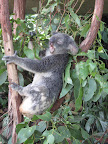
oh, and here's a picture of a koala we saw eating:


Monday, March 12, 2007

hearst castle


we went to hearst castle today, which was the estate of william randolph hearst, the wealthy media magnate. he gave the estate to the state of california when he died, and now you can take tours of this grandiose, somewhat over-the-top location. as you can see above, the estate itself is located up on the top of a hill, but what you can't see is the fantastic view over the pacific ocean. must've been quite something waking up to that view everyday.


anyway i had mixed feelings about the place. in my mind, it was very gaudy. it seemed a mish-mash of ancient artifacts, more recent artifacts, and furniture from the major department stores of the early 20th century. cohesion isn't a word i'd use.


however, big is certainly an appropriate word. for instance, in the picture above you can see one of the two swimming pools on the property. the pool is drained because of leaks, but just look a the size! it's huge. that ladder is for a person. and in the upper left corner of the pictur eyou see the greek building? that's supposed to be some sort of greek temple recreation, so people would think feel like they were in ancient greece when swimming here. in fact, scenes from sparticus were filmed at the pool.


this brief trip to a california landmark reminded me of how much i have yet to see in california. it's a remarkable place and i've barely explored any of it.
Posted by Picasa

Thursday, February 22, 2007

make me a drink, and don't ask questions!

last weekend i was at bar called the orbit room with a number of people. it was a unique experience and i thought i'd yelp about it, because there was both good and bad. here's my review:
interesting drinks, but slow service and what attitude! perhaps not the best place to go on a saturday night. they only had one bartender, and it was really busy. when my girlfriend finally got to order, she just specified the flavors we wanted, and after much effort the bartender produced a fantastic fruity rum drink (but not like punch) that i enjoyed sooo much.

this only took 20 minutes!

as for the attitude: another one of us really wanted a drink with orange and mint flavors, and he told the next friend who was going up to brave the long wait and get us a round. this gallant soul returned after 10 minutes with no drinks, telling us that the bartender needed a new order because he objected to the orange and mint combination. supposedly, it's just not done...

now, if you read other yelp reviews of the orbit room, you'll find that some people love it, and some people hate it. anyway, in my review i thought it was a bit ridiculous that the bartender wouldn't try to make something that sounded pretty reasonable (orange and mint). anyway, i received the message on yelp below with the subject "reconsider your thoughts":
well, obviously the bartenders are more knowledgeable at mixing drinks then the custoemrs. so you shouldnt be angry or upset because they wouldnt make the drink. they obviously are more aware of what flavors would go together better than the average drinker. and if you said the first drink was amazing then you shouldve just trust it instead of trying to purposely upset them. they are artists and shouldnt be treated this way and i hate when people say things unfairly about them making them look badly, because you canst get a drink likethe way they make it anywhere else!
my personal feeling is that the customer is almost always right, and unless they ask for something totally out in left field, the idea of rejecting a request is just bad, in a service industry. at least discuss it! i will say this: i never want to work in the service industry, if i can help it.

Tuesday, February 13, 2007

being respectful and bitterness

today i reached a classroom for one of my lectures a bit late. i looked in and it didn't look like my class. there was a woman with a name tag milling about outside so i asked her if this was my class. she said no, it had moved today because of a conference, hadn't our professor told us? i said no, and asked her where the class had moved. she mentioned the location (a location i had walked by on my way to class). i laughed and said "i guess i'm not going to class today. it's not worth it" and then i walked away.

as i'm walking away, the woman shouts in my direction "what a great student you are. i'm sure you'll make an excellent professor one day."

i look back at this woman like she's insane, but say nothing.

bitter administrators. i've encountered quite a few of them while at graduate school. this woman knows nothing about my class or me, and she has the audacity to loudly offer her sarcastic opinion, when it is not asked for. my comments were in no way antagonistic towards her, in fact i didn't even address her when i said i wasn't going to attend class... in reality, i decided not to go to class because (a) our professor is irresponsible enough not to provide us with this information, giving some indication that he doesn't care too much about our time or class experience (he can easily send email to all registered students). (b) the lectures aren't that great to begin with (mostly regurgitations of the textbook), and i usually find my mind drifting to other topics, so the idea of having to walk yet farther to go to a potentially useless lecture is not very appealing. i could get other things done. she knew none of this, but decided that her comments were worth voicing.

honestly i don't understand all the reasons many of the administrative people i encounter appear bitter and angry, but i do know that i treat them with respect, because they deserve it (as do i, and you, dear reader). maybe this person was having a bad day. but my consistent experience with this group of workers is that they can be quite unhelpful, bordering on mean and bitter in the tone of their responses. i wonder if their job really is so bad that they stop showing students respect?

my dad's college friend once told this funny story about my dad. at college they had one friend who my dad would always respectfully refer to by appending some word to his name. this person didn't think the word was needed, and would not use it himself. anyway, my dad would always do it, and finally this friend started accepting this more respectful reference, and also used the respectful form of reference when talking to my dad. one take away from this story was that you'll get back what you put in -- don't just expect a certain treatment if you're not going to give it in return. the second is that consistent behavior can be contagious -- and if it's the behavior you want to convey, you might derive benefits if you think others should adopt the same behavior (an aside: my dad is a rather mischievous person, so i think that perhaps he was doing this to playfully annoy his friend).

and now the conclusion to the story:

anyway, when i got to my office, i found grant, who also hadn't gone to class. he convinced me that despite our lateness, we should walk over to class. the new location was near my next meeting, so i agreed. we get there and the class hasn't even started, despite it being 20 minutues past the start time. the prof had just arrived! ridiculous, irresponsible, but not surprising.

Thursday, February 08, 2007

"friends"

i love how the social networking sites have appropriated the word "friend" as a catchall for everyone you're connected to. i saw this image today on yelp when i was looking at someone's profile and it made me feel sad for a second:


then i remembered it was stupid yelp "friends."

my oral exam

a week ago i had my big prelim exam. i haven't chatted much about my exact work at berkeley, but i'll give a quick summary: unable to find a problem that stoked me in theoretical computer science, generally unhappy with theory and fearing that i couldn't meaningfully contribute to the field, i decided to expand my search for topics of interest and i landed in a class on human-computer interaction.

the entire semester was fascinating, with many neat readings (which i've discussed on this blog here and here) and research possibilities that i am intrigued to explore.

so i decided that this was the area for me, at least for now, and i dove in. diving in requires taking an oral exam where professors ask you 4 questions concerning a large set of papers covering the major ideas in the area. in case you're interested, you can find a slightly different reading list here.

now, you pass the exam if you get 60%. i botched one question, in my opinion, quite royally. i was stressed to no end because of this mistake, because with 2 of the other questions it was hard to read the professor's reactions, and some of the inquiries were quite open-ended.

after the exam, they tell me that they'll let me know my result in 1 or 2 days. so i'm freaked out for the next two days. as i'm driving home, i get a call from my friend who also had an exam, and he tells me that he passed. at this point, i restrain my foot and attempt to drive the speed limit as i head home to desperately check my email.

...

...

i passed! and i didn't do as badly as i thought. now that chapter's over, and i can focus on research and learning.

yay!

Monday, January 29, 2007

botero's abu ghraib paintings in berkeley


today i was lucky to hear fernando botero in conversation at berkeley. botero recently produced many paintings depicting the indignities and torture perpetrated by american soldiers in abu ghraib.

many galleries in america refused to show the paintings, which is a shame, because they depict horrible scenes that should be the launching point for discussion. botero stated that one reason he painted these scenes, as opposed to depictions of terrorist attacks, is because it was especially shocking for him to learn that america, the beacon of freedom, democracy, human rights, had perpetrated such an awful thing. he feels that the incident is the most awful black mark against america's reputation in recent history.

the image of the painting above is representative of the exhibit. the prisoners are prominent, and their loss of dignity is obvious. the torturers are usually represented by a gloved hand. the small window in the corner is a contrast to the claustrophobic atmosphere -- a hint of hope.

you can find more images here.

the nation has an article on the paintings. i think this quote nicely sums up the exhibit:
When the photographs were released, the moral indignation of the West was focused on the grinning soldiers, for whom this appalling spectacle was a form of entertainment. But the photographs did not bring us closer to the agonies of the victims.

Botero's images, by contrast, establish a visceral sense of identification with the victims, whose suffering we are compelled to internalize and make vicariously our own. As Botero once remarked: "A painter can do things a photographer can't do, because a painter can make the invisible visible."
the exhibit is at berkeley's doe library. here's the info

Exhibition Hours and Location
Room 190, Doe Library
January 29 – March 23, 2007
Monday – Thursday: 10:00 am – 7:00 pm
Friday – Saturday: 10:00 am – 5:00 pm
Closed on Sundays

Thursday, January 25, 2007

football and workplace injury

no matter where i look recently, there seems to be a trend in sports writing: long-term injuries in professional football players. the new york times had a general article titled "The N.F.L.’s Blue-Collar Workers," the sf chronicle examined injuries of the players from the 1981 49ers superbowl champion team, and the new yorker had an article looking at the ny giants recently retired running back tiki barber (not online, stupid new yorker), with quite a bit of discussion on the idea of retiring before the injuries really wreck his body.

here's a quote from the times article:

But despite all the trappings of a modern business empire, football — or more specifically its labor system — harks back to the 19th century. Like miners and dock workers of that time, the N.F.L.’s work force has little protection against job loss. Workers frequently toil outdoors in freezing temperatures. And they often literally put their lives at risk, as we were reminded last week when a neuropathologist claimed that the suicide of a former N.F.L. player, Andre Waters, was linked to brain damage he sustained while playing football.

“It brings to mind the high-risk jobs of the earlier industrial period,” said Raymond Sauer, an economics professor at Clemson University and founder of the Sports Economist blog.

To be sure, football players, with their generous paychecks, do not seem as exploited as those rail-thin miners dusted with coal. But compared with athletes who ply their trades in two other big-money sports — basketball and baseball — they’re strictly blue collar.


on particular injuries themselves, from the chronicle:
Keith Fahnhorst has a more fundamental wish: standing up straight. Fahnhorst, a mainstay on the 49ers' offensive line in the 1970s and '80s, stood tall at 6-foot-6 in 1981, but now he walks hunched over because of spinal stenosis and degeneration of the disks in his neck and back.

Fahnhorst, 54, also totes routine baggage for a longtime offensive lineman: worn, bent hands from years of grappling along the line of scrimmage. Fahnhorst said his left thumb and forefinger remain numb to this day, as they remind him every time he tries to button his shirt.


now, of course these people made a lot of money, and most of them say they would do it again, even with all the risk of injury. but to me, that sentiment seems to miss the point. the players and teams should examine whether the men on the field need to be exposed to so much risk when they play the game. from the articles, i gleaned that things were somewhat worse in the 70s and 80s, when players would hop right back onto the field after sustaining a mild concussion or injury, for fear that they would be benched and out a job otherwise. today, it's better, but i also read about a player who said that the hits these days are even crazier because all the new padding gives a false sense of security.

after reading these articles, i get the distinct feeling that the players do not have good representation at the table whe they negotiate with teams. the majority of players don't get paid that much, are in the nfl only for a few years, and leave with few benefits and a high risk of long-term injury. no matter how much money they make, the players deserve better.

this got me wondering about other types of long-term injuries, specifically mental ones, that could creep up on people in other professions. like lawyers. but i need to read more before i make any comments...

finally, in case you were wondering how viscious this stuff can be, watch this video (but be warned, it's awful!):


UPDATE on 2/1/2007:
here are two follow-up stories in the new york times that appeared as a result of their original reporting:

Dark Days Follow Hard-Hitting Career in N.F.L.
Ex-Players Say Increase in Pensions Is Needed

Monday, January 22, 2007

rewiring how we think

update: i made a shirt out of this. read below then check it out.
look at the picture below. what do you see?


Click here to see a clearer picture


look back at the original picture. i'm sure you see it now. unfortunately (or fortunately) you will likely always see the picture in this new way now. you're tuned into it.

i saw this in a paper i'm reading called Research Methods in Human-Computer Interaction by Thomas Landauer.

what does this have to do with human-computer interaction? the paper is trying to make the point that an expert who has worked with a system for a long time can no longer think like a basic user, and hence we should be wary of relying on expert intuition alone when making usability decisions that might affect all users. landauer writes:

One you 'see' something, your cognitive structure (your brain, if you must) has been irreversibly changed, and you no longer see the world in the same way. What you could not see before you can now see easily, and it is virtually impossible to put yourself in the place of a person who has not had the same experience. If this brief experience can have such a dramatic effect, imagine what profound perceptual changes must result from tens or hundreds of hours of practice with an initially alien computer system.
of course, this idea extends beyond building usable computer systems.

it's fascinating to see that my brain has latched onto this structure. i did not see the cow prior to seeing the second image. now all i see is cow. what hope do i have of changing my perceptions about long-held beliefs where the evidence to the contrary might not be as clear-cut as the cow?

i miss the days when i could rewire my brain quite easily.

Wednesday, January 17, 2007

more on charity

i just listened to an absolutely wonderful, insightful and nuanced kqed forum on charitable giving (follow the link and you'll find you can listen too!). michael krasny spoke with arthur brooks, an academic who recently wrote "Who Really Cares: The Surprising Truth about Compassionate Conservatism." (pdf of wall street journal review)

don't let the title fool you that the book is wrapped up with the fact, borne out by numbers, that conservatives are more charitable than liberals. that's certainly interesting, but there's so much more to learn.

first off, brooks says he defines charity quite broadly, and so this includes not just what's on tax forms, but political action donations, blood donation, volunteer work, etc.. he uses massive amounts of data gathered over many years, both nationally and internationally, and he makes some surprising conclusions.

one of the most surprising conclusions was that young liberals are the worst givers (money and time). some people called in saying that they knew young liberals who do work X, and that work itself is charitable, and did brooks take that into account... brooks answer was quite reasonable, in my mind. how do you judge the "charity" of a particular job? ie, is a teacher doing a "better" thing than someone working at microsoft? he did acknowledge that certain people go into professions where they make far less money than if they went elsewhere, but they take that job for the "good" it will do. however, brooks was quite worried about making that value judgement, and i have to say that i'd have some trouble too, not just because i'm a scaredy cat.

there was lots of discussion about religion. brooks pointed out that religious people give WAY MORE than those who aren't religious. he speculated religious institutions do a very effective job of teaching about charity (there was some discussion about the motive "getting into heaven" if you are charitable). i was thinking that it'd be great if this kind of teaching moved more into the secular world, and that was discussed as well.

finally, people who give more are happier and more successful than those who give less. not sure how he measured those things, but it sounds good. i'm going to get the book and read more. stay tuned :)

charitable giving: more local?

i've been thinking a lot about charitable giving for the past few months (to learn more about random charities i was using charity navigator, which was useful). i'm still trying to think through my charitable giving goals: what matters to me? how should i best contribute to help? lately i've been thinking that i really want to help locally. i want to give locally, volunteer locally, local local local. why? well, i'm human, and it's easy for me to connect with local changes and what's going on around me, what i can see. more importantly, however, is that i believe we need to think about total wellness, and that's easiest to look at going outwards from yourself: your own wellbeing, your community's wellbeing, your society, other societies, the world...

of course, all these "wellbeings" can be prioritized. but how do you do that? someone recently said to me something along the lines of:
how can you give money locally when there are children starving around the world? when there are people with diseases that we can cure if only we have the money to pay for the inoculations?
these are important questions to consider. certainly it's not either/or.

most people where i live have shelter, food, and basic medical support. that can't be said for many people around the world.

perhaps my local push comes from a feeling, at least for me, that there's something really missing when i write my check to help inoculate children in africa. it's more than just wanting a philosophy to back my charitable agenda...

anyway, your thoughts on charitable giving are much appreciated.

below i've posted some findings from a study of young people's engagement in charitable giving done by the joseph rowntree foundation. you can find the report here.

  • Young people define 'charity' and 'giving' more widely than formal organised charitable activities such as giving money, focusing more on engagement through active involvement.See a list of related documents...
  • Charity is not seen as something only charities do; 'helping' others in the community informally is also seen as an important charitable act. Neighbourliness or something akin to citizenship is seen as a positive value, while giving time, in general, is seen as a greater effort than giving money and is often perceived as a more valuable gift.See a list of related documents...
  • Young people are themselves engaged in a variety of activities that come under a wider definition of 'charity', better defined as 'altruistic engagement': from giving goods to charity shops to buying the Big Issue, Fairtrade goods, recycling, campaigning and taking part in charity events. See a list of related documents...
  • The real level of young people's engagement with charity in the wider sense is being underestimated by traditional giving surveys and narrow approaches to measurement, which rarely include the type of activities mentioned by the young people.See a list of related documents...
  • Young people aged 16-24 are particularly likely to fall through the net of existing opportunities for engagement with charities.See a list of related documents...
  • There is a feeling among young people that the emphasis on raising money can be disempowering as they have limited funds to give and more to offer charities and voluntary organisations than money. Many feel that there are insufficient opportunities to give their time to charity, while only a few feel that there are insufficient opportunities to give their money to charity. See a list of related documents...
  • Young people want more information from charities about what is done with their money and how their donations effect change, and they believe that having more information would encourage them to give more in future. The vast majority think that they will be engaged, giving both money and time in the future.See a list of related documents...

Tuesday, January 09, 2007

parking in sf


a few years ago we were driving around san francisco looking for parking. we were on a one way street when we passed a good spot. i hopped out of the car to stand in the spot while the car circled back.

things looked ok, until a woman drove up and said, "you can't do that. i'm taking that spot."

i stood there as she moved in, and the front of her car came within a foot of me. but she stopped, let loose all kinds of verbal abuse, and sped away.

fast-track to 2006: some friends are looking for parking around market and 2nd. a woman sees a spot and stands in it, holding it while the car can get there. a big man in a big truck comes, gets angry, but goes away, and they get the spot. my friends see this same guy (big man big truck) at the event they go to, and they literally duck and cover to avoid his gaze.

and then i read this in a new york times article on parking in san francisco:

Last month, the police announced the arrest of a second suspect in the killing of Boris Albinder, 19, on Sept. 16 near Golden Gate Park as he tried to save a parking space for a friend by standing in it. The authorities say Mr. Albinder was attacked by a group of men in a van who demanded that he cede the space.
wow!

parking etiquette

so, the question: was it wrong for me, and others, to hold a space as we did? should parking spaces be only taken by cars, and in that case, first come first served? i actually wonder if it's illegal, what i did. you'd think the law says something about it. but based on some quick searching, i find this comment in a news article which leads me to suggest that the law doesn't have much to say on this point. from a 1996 palo alto online article:

The problem even resulted in fisticuffs. Palo Alto police say they were called to the mall Sunday evening when a shoving match began over a parking space. A woman was standing in a parking spot to save it while her boyfriend drove around. The male driver of another car, however, apparently wanted the spot and began inching into the space. The result was a confrontation that required police assistance. Neither party wanted to press charges, said Palo Alto Police Lt. Jon Hernandez.
of course, i didn't search very much. one argument against such tactics is that it could make parking, already notoriously difficult, practically insane as people come up with all kinds of tricks to hold spots. i think people already have many tricks, but if things got out of hand the law would really need to get involved. this video shows things getting out of hand:


anyway, it seems there might be a ghost truck going around san francisco attacking people who hold spots by standing in them... so i'll be cautious.

Saturday, January 06, 2007

be it resolved that ...

back in canada i used to do debating. i was reminded of this when i saw an interesting article in this week's new yorker about the intelligence squared u.s. organization. they arrange oxford union style debates between world-class debaters and experts on important topics. the debate written about in the article concerns the resolution: "hollywood has fueled anti-americanism abroad."

an oxford union style debate has three affirmative speakers and three opposition speakers. we'd do the same thing back in high school, usually in a parliamentary style. anyway, mild heckling was always encouraged and there were many good times. the debate resolutions would be serious (be it resolved that euthanasia should be legal in canada) to amusing (be it resolved that two plus two is not four) to odd (be it resolved that i fought the law and the law won).

i miss it. there must be debating groups in sf and berkeley. i'm going to find one.

i was trying to find a video example of a parliamentary or oxford union style debate when i stumbled upon this video of malcolm x talking at the oxford union. i'd never really seen much footage of him, and found it riveting.

Thursday, January 04, 2007

bad notes: infovis is important in know. cryst.

i'm going over my margin notes for a paper on information visualization. there's a subsection of the paper devoted to knowledge crystallization.

i clearly wasn't with it when i wrote this note. the scribble reads "infovis is important in know. cryst."

now, given just the stuff i describe above, we already know that. there's an entire section of a paper on information visualization devoted to it! this note is vacuous. i must've been really tired!

i'm trying to get better at knowing when i'm toasted, as i was clearly when i read this paper the first time. i have a bad habit of working beyond my mental or physical means (in the physical world, this has led to repetitive stress injuries...)

well, glad i'm going over the paper again.

Followers